← All coloring books · Science & Nature
The Underground & Garden Harvest
$9.99
Buy on Etsy · $9.99
Instant download · US Letter PDF · personal use
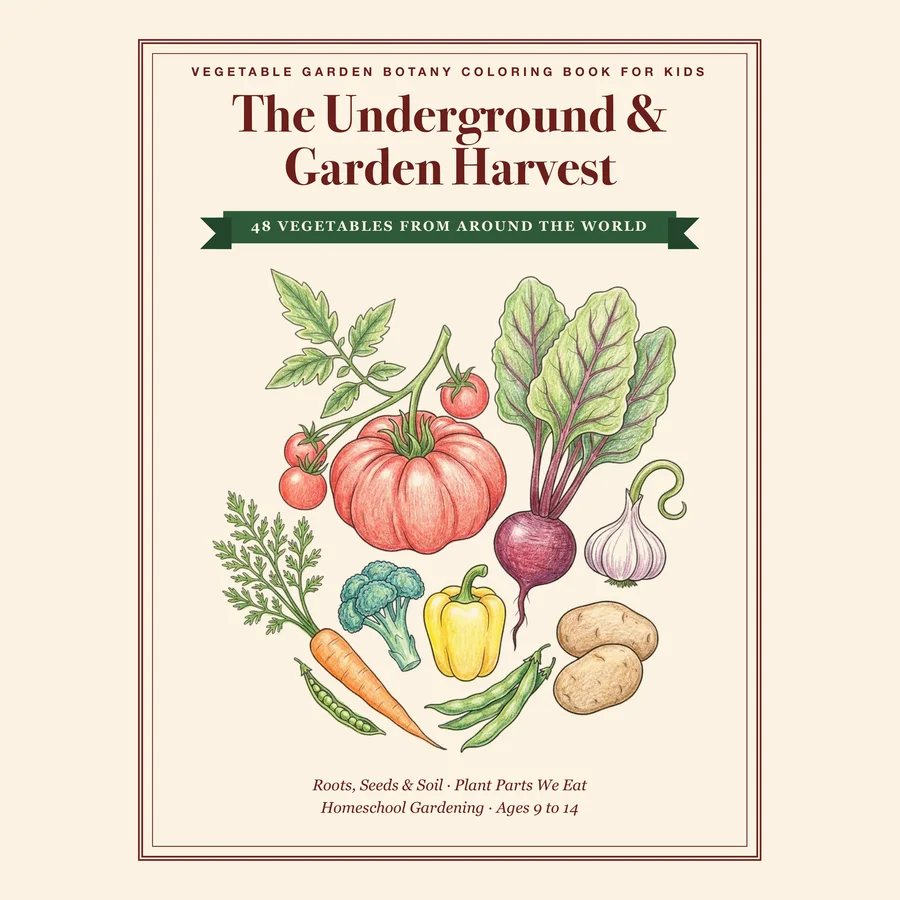
Vegetable garden botany coloring book for kids 9 to 14: 110 pages, printable PDF in US Letter and A4. 48 vegetables, each with a fact page and a page to color.
⭐ Welcome to Guaycura Creations!
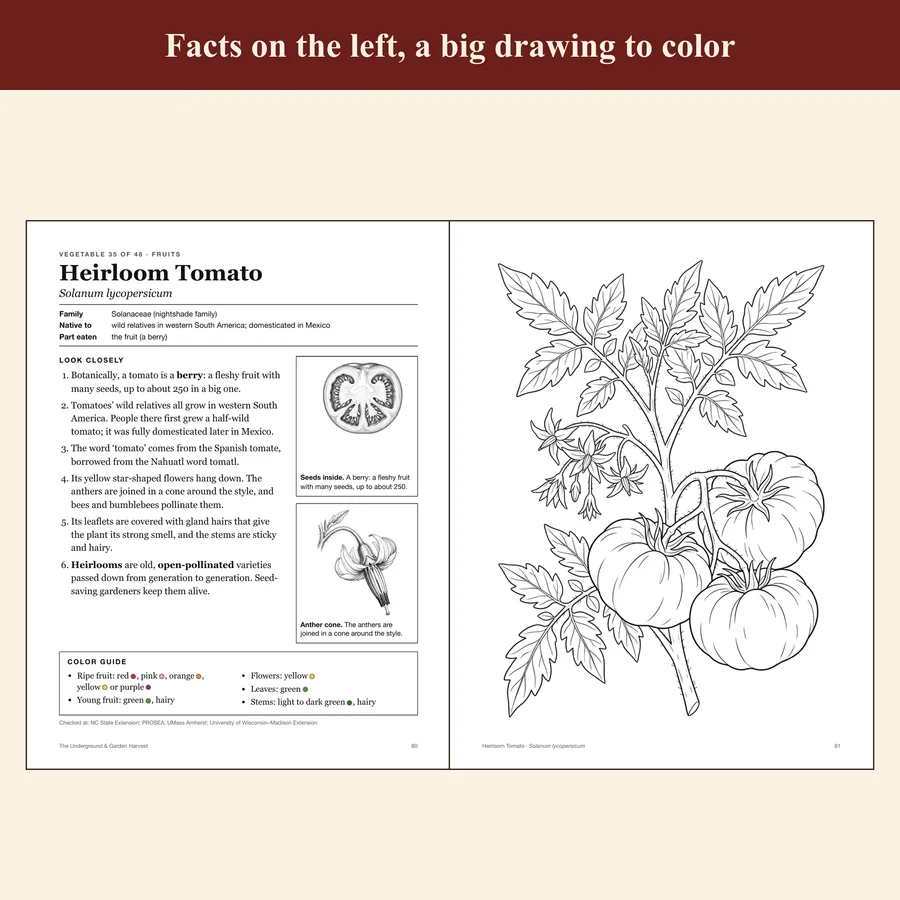
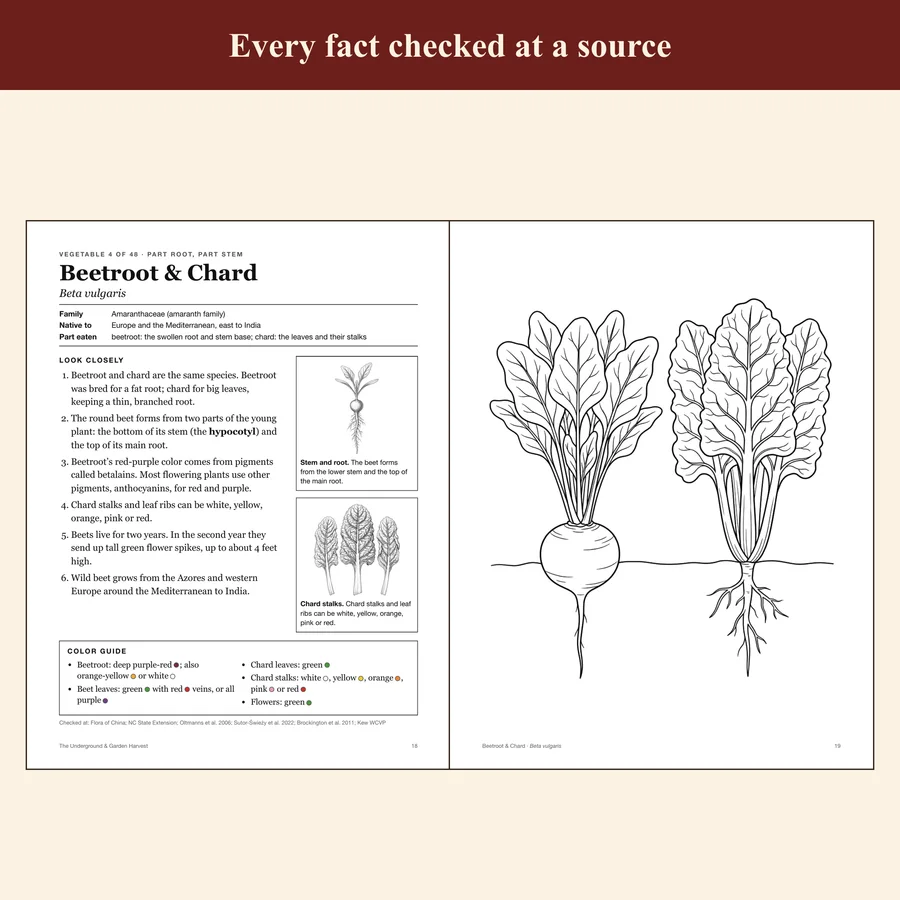
"The Underground & Garden Harvest" is a vegetable garden botany coloring book for curious kids about 9 to 14: 48 vegetables from every continent except Antarctica, each on a two-page spread. The left page is a short botanical study of the plant; the right page is a large drawing of it to color, often showing the plant above and below the ground.
It works as a ready-made garden science unit for homeschool families, and as a calm, screen-free science book for anyone who likes gardens, vegetables and drawing. It is the fourth book in our botany series, with "The Science & Beauty of Flowers" and "Orchard & Vine Fruits of the World".
🥕 WHAT'S INSIDE (110 pages)
• How to use this book, with a contents page.
• Plant parts we eat: a labelled drawing of a bean plant (root, stem, leaf, leaf stalk, bud, flower, fruit, seed), then the same drawing blank for your child to label.
• Under the ground: taproots and fibrous roots, storage roots, tubers, rhizomes, corms and bulbs, and how to tell them apart.
• One plant, many vegetables: how kale, cabbage, Brussels sprouts, kohlrabi and broccoli are all one species, and why botanists disagree about cauliflower.
• The Three Sisters: corn, beans and squash grown together in one hill.
• Heirloom seeds: sow, flower, ripen, save, and what open pollination means.
• How vegetables defend themselves: the plant chemistry behind garlic's smell and a chili's heat.
• 48 vegetable spreads. Each fact page gives the common and scientific name, the family, where it comes from and the part we eat; 5 or 6 facts in plain words; two small close-up drawings (a root cut across, a bulb, a pod, a seed head); and a color guide naming the real colors of the living plant, with a colored dot beside each color (where a color could not be checked, it asks your child to copy it from a photo).
• Glossary, answers, and notes for parents and teachers.
More from Science & Nature
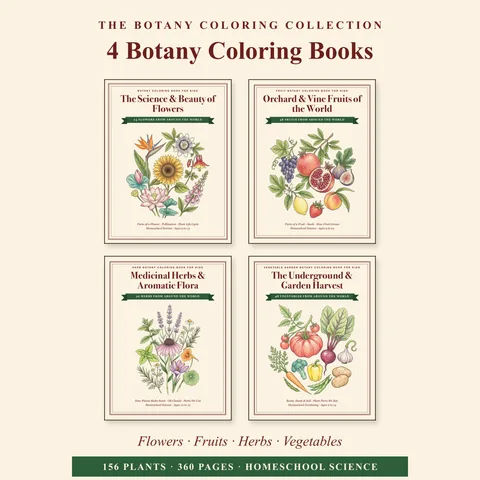
Botany Coloring Book Bundle for Kids | 4 Books: Flowers, Fruits, Herbs, Vegetables | Homeschool Science | Printable PDF
360 pages · printable coloring book
Buy on Etsy · $24.99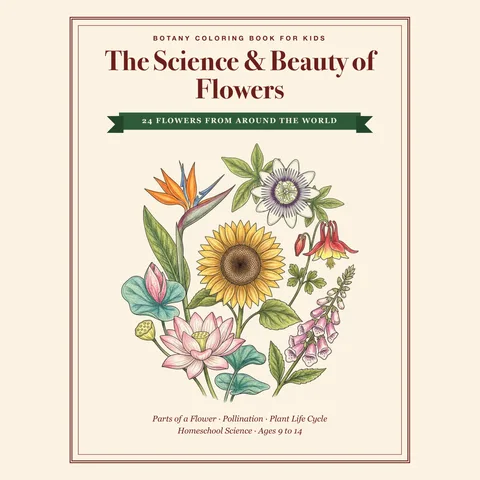
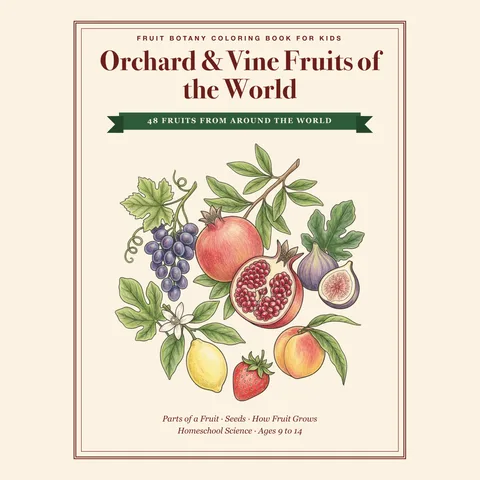
Orchard & Vine — Fruits of the World
48 fruits · fruit botany coloring book for kids
Buy on Etsy · $9.99